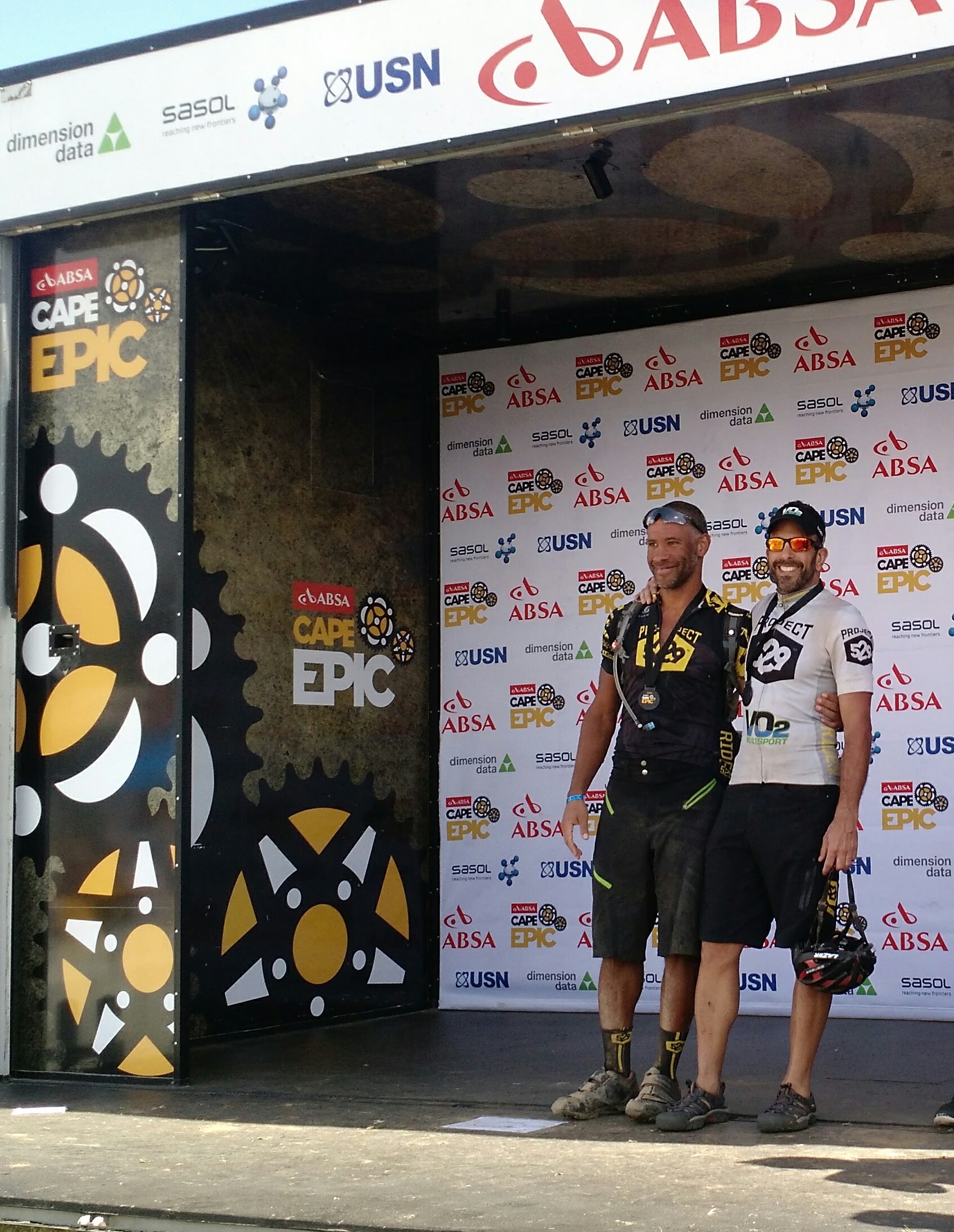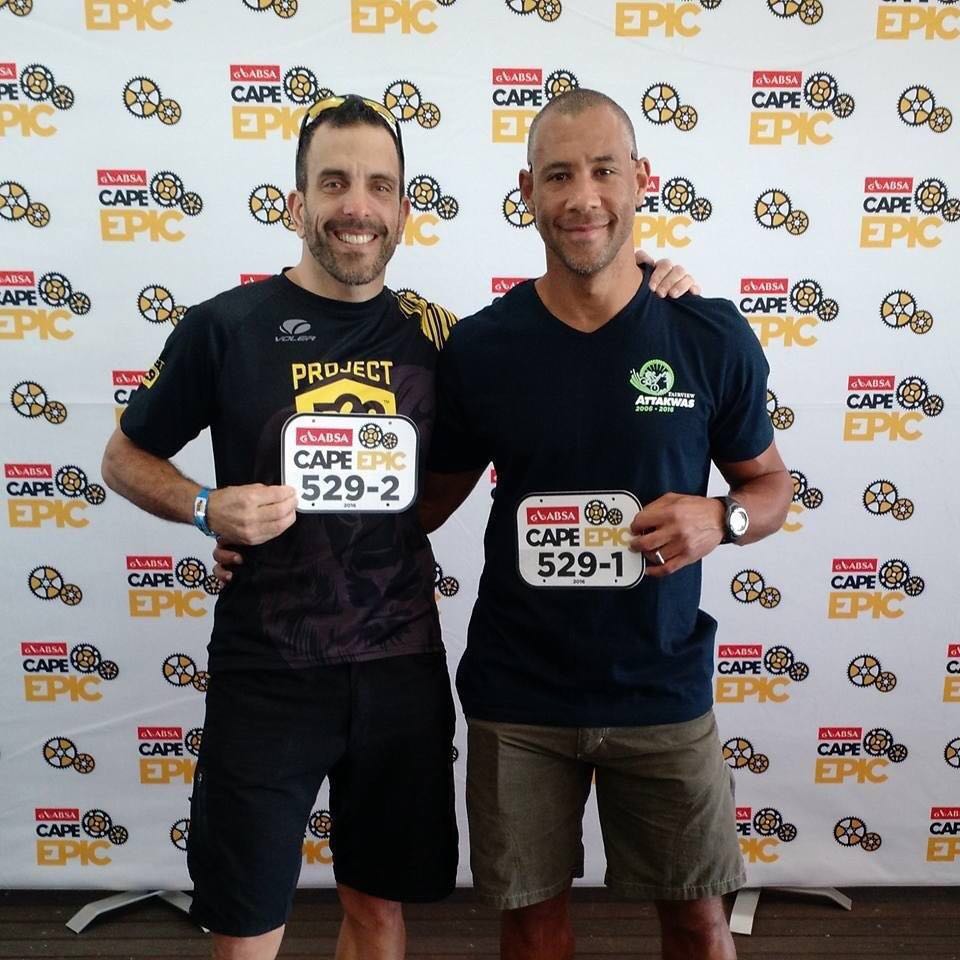
With the benefit of a few days since the conclusion of the 2016 edition of the Absa Cape Epic, I thought long and hard about writing a race report. Alex, my teammate for the race, has already posted his race report. The more I tried to stitch together a narrative about the week of racing, the more I realized I was unable. This was my first stage race, and I continue to be surprised by how much the whole week blends together. 650km and 15,010 m of climbing will do that to you.
I did, however, want to provide a resource to folks looking to do this, or similar, race in the future. So this post will be broken down into a few parts.
- Preparation - notes on the training leading up to the Epic.
- Do’s and Don’ts - stage race rookie, but racing veteran, I include some thoughts on things we did, wished we did, and wished we hadn’t.
- Vignettes - There were so many great incidents and one liners from the race that come to mind which help embody the spirit of the race. I will share those instead of an exhaustive race report.
Preparation
2729.2 miles and 182 hours of saddle time. This is from Oct 1 - Mar 12. I was really in training all of 2015, but that year I did 3 half Ironman races, and the last one completed in late Sept. That meant that Epic specific training didn’t start until Oct 1, 2015.
When you live in Boulder, Colorado, people think “ideal training location.” This is mostly true. Unless you are training for a stage mountain bike race on the other side of the planet in the tail end of their (hot) summer. Boulder County is not renowned for its single track riding. Much of my training, when I could get outdoors, was done on dirt roads and some fire road/jeep track. Having a family made it difficult to trot off to other locations for weekend riding.
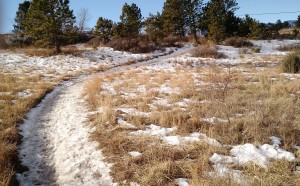
This was also a particularly rough winter in CO. We had a ton of cold, and the snow lingered on the ground for some time. That meant that I was often riding uphill in snow, and would be forced to stop when the snow was too deep or loose to ride. It also meant that training rides started in the morning at 0-10F, which is really cold and not fun. Suck it up, but not fun.
The lack of riding on trails, and the massive amount of riding I did indoors on my Kickr, meant that I didn’t have the leg training for riding on the loose, large rock, trails of the Epic. My legs wanted a more consistent turn-over rate; more consistent application of wattage to wheel. What I found during the Epic was that the climbing was taking more out of me because of the shifting wattage required as the bike moved around on the surface and inputs to the handlebars required to miss rocks. If you are already an accomplished mountain biker, you will have less of a challenge. I fully acknowledge I am a tri/roadie guy who also rides mountain bikes.
This training did help, however, during the parts of the Epic stages where we were group riding or riding on smoother roads or even tar. I was the puller. I was the guy who bridged to the next group. I was the guy who made sure the crosswinds didn’t leave us out to dry. Sadly, this comprised only 5-10% of the Epic, so I wasn’t that useful.
If you can, practice your technical descending. My riding definitely got better as the week of the Epic bore on, but I was astonished (shocked, really) at the number of Epic participants who were hopping off their bikes on downhill singletrack at the first sign of rocks. It was, honestly, pretty frustrating.
Find a good seat. I have been riding the same saddle for years. I have never, ever, had any saddle sore problems. The Epic tore me up. 8+ hours in the saddle, in extreme heat, with various road conditions really did a number of me. I went to the bum clinic at least 4 of the days I was there, once with a (TMI alert) grape sized blister on my backside. Make sure you love your seat, and make sure you know what will happen if you ride multiple 8 hour days on it.
Heat - there is no way to prepare for the heat other than to ride in it. The heat crushed me in South Africa. It’s very hard to come from Boulder in winter to South Africa in summer with little to no acclimatization. I didn’t try riding with a heater blowing heat in my face in my pain cave, but I doubt it would have helped. The sun pushes down on your neck and shoulders when you are climbing. The UVs suck the life out of you. There is no preparation for that except to live it.
Coaching - Alex and I both trained with Ben Bigglestone of VO2Multisport in Seattle. Having a coach was immensely helpful. No, that’s not right. It would have been difficult to succeed without Ben’s guidance. Structured training matters. Knowledge of what is happening to our bodies, and how to train around them was invaluable. Getting us to the same physical place for the race was an incredible accomplishment. If you can afford the Cape Epic, you can afford a coach. If you are not already an uber accomplished athlete, utilize one.
Do’s and Don’ts
- Do make sure you are racing with someone you know. There were ups and downs during the race. For the first few days, while my body was letting out a series of “what. the. actual. f!cks” dealing with the heat, having a partner who was a friend-first mattered. He stuck by me. It also meant that when my partner had his rough days, empathy was top of mind and I was right there by his side. We saw way too many teams where one partner was having a tough day and the other just disappeared into the distance, or wasn’t providing any encouragement what so ever.
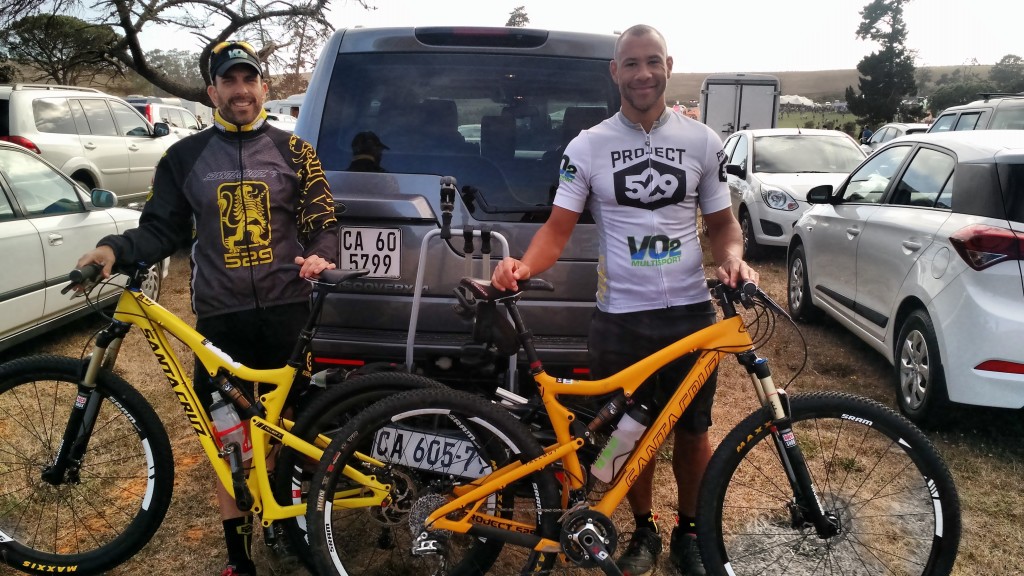
- Don’t believe you have a master plan. The Epic reminded me of the Mike Tyson quote along the lines of “everyone has a plan to fight me until I punch them in the face.” The punch came during the prologue.
- Do get a camper. If you can swing it, and the non-South African exchange rate certainly helped, get one. Having a quiet space, away from the camp ground, mattered. Having climate control mattered. Having a refrigerator mattered. Having power mattered. Having personal space for storage larger than a tent mattered.
- Do get a masseuse. Similar to the camper item. Again, exchange rates helped make this one palatable, but the dollar goes very far in South Africa. Curt was AMAZING. Great masseuse, very solid guy, and he drove the camper during the transition stages. Absolutely, hands down, worth it.
- Do have family buy-in. The training required for the Epic was more of a toll than for any half or full Ironman. The main reason was the concentration of long bike rides. It’s hard on the family. Also, Epic takes over all of your thoughts. I can’t remember my mental state right before my first Ironman. Maybe it’s the same.
- Do get a coach. Noted above, but get one.
- Don’t get cute with nutrition. Train the way you are going to race. This consistency made my life very easy during the race. There were no surprises. I use CarboPro, which made transport of nutrition to the race a very interesting problem. Three large tubs in my bag chewed up space and weight. But the day to day knowledge of no surprises, and (super important) no gastro issues, was massive.
- Don’t think you are going to be all social media-y during the race. I brought my GoPro. I think I pulled it out once or twice. The picture taking rate looked like a decay curve. As the week went on, there were fewer and fewer pictures taken. You are just too tired.
- Do invest in Skype. While the village wifi solution wasn’t 100% perfect, the Dimension Data guys provided enough infrastructure for racers to be able to use the internet. Skyping home, after a rough stage, makes an enormous difference.
- Do get in touch with your sensitive side. I have never seen so many grown men cry. Myself included. The range of emotions during the week was intense.
- Don’t get cute with your equipment. Alex and I rode mostly the same kit, with the exception that he had a front derailleur. I don’t want to sound like a SRAM 1×11 convert hippie or anything, but the only mechanical we had all week was his front derailleur failing. Having us both on similar equipment, tires, etc, meant that we could be sparse with our spares we carried, and allowed one of us to be the mechanic.
- Do invest in a mechanic course. I spent 1 hour with a mechanic at Colorado Multisport and it paid off. We spent the hour pulling apart my bike and putting it back together. This gave me so much more confidence heading into the bush.
- Do invest in a mechanic package. With the course under my belt, we invested the extra money to have the team at Trail and Tar from Cape Town look after our equipment all week. We could drop our bikes after the stage, they would wash, rebuild, service, etc the bikes, and securely lock them. We picked them up in the morning ready for the next stage. That alone removed so much worry from the day to day existence of the race.
- Do have a solid attitude. Unless you really think you are going to be a GC contender, remember, you are there to complete the race. Talk to the people around you. Learn things. Make friends.
- Don’t be a dick. I’m looking at you Marcus from Belgium. (fair disclosure, he redeemed himself - more on that below)
- Don’t think you are racing a mountain bike race. This Epic claimed to have the “most single track ever.” Laughable. This is a race that is run on farm and district roads. There is some single track, but the vast majority is on dirt roads with large rocks, or (worse) sand. There was precious little day to day that had me grinning ear to ear for the single track goodness.
- Don’t believe the race director. Their weather forecasts were always wrong (low by 10-15F), and they don’t give you the truth about trail conditions. I am not sure why this is. Even when they told us there would be sand, they used the words “little bit” to describe 30+KM of it. You read that right.
- Do expect one more climb. It doesn’t matter how good the topo map they give you. On every stage, it felt like there was always one more little “eff you” climb at the end.
- Do thank your sponsors whenever you can, especially on Instagram, Facebook, etc. My Santa Cruz Tallboy performed like a champ. My SRAM 1×11 XX1 drivetrain had zero problems. The Maxxis Ikon UST tires had no (NONE) punctures.
#VO2MultiSport #ride529 #project529 #spankbikes #srammtb #maxxistires #santacruzbikes #dakine #abuslocks #ixssports #tgccrew #smithoptics #kirklandbicycle
- Do expect the unexpected. On the last day, some jerk face swapped out my front wheel (a very swish SRAM Rise 60 carbon) for a not so swish wheel. At the end of 8 days, your attention to detail flags, and since the tire was exactly the same, I didn’t notice until we were back at Alex’s house. We surmise this happened while the bike was in the bike paddock, but who knows. The Cape Epic race office has totally passed the buck. It sucks. I love my SRAM wheels. Here’s hoping they take pity on me, and allow me to send in a creatively destroyed competitor wheel for a crash replacement. 🙂
- Do thank your wife and family and other supporters. You all know who you are, and without you, there is no way we get through this. Christy and Christina, thank you for letting two grown men act like boys for a week and go ride bikes.
Vignettes
Like I said above, I don’t think I could accurately reflect a true race report. So much of it is a blur. Instead, I am going to share some of the great quotes from the race, and attach the story associated with it.
“Even if this were an argument, you would be losing, but it’s not. You are done.”
I figured I would start with the hardest one. I was pulled from the course at the end of stage 5 by the medical staff. I was dehydrated, at the early stage of heat stroke, and had very low blood sugar. They were worried about kidney failure. Fortunately that turned out to be wrong. It was a very hot race. The attrition rate was something like 27% this year. When the wind stopped blowing, there was no escape. There were several sections where you were climbing, fully exposed to the heat. Just brutal. I have done many endurance races. This was, without question, the hardest from a mental and physical point of view.
“Sometimes you are the hammer, and sometimes you are the nail. You are 4 inches into the wood my friend.”
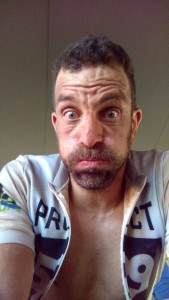
This is related to the one above. The medic (Adrian) had some good quips, and this one was awesome. Hot. Did I mention the heat? This picture was a selfie after the stage 1. Mind you, I have done two full Ironmans, 11 half Ironmans, marathons, 3 50+ mile mountain bike races. It was rough out there.
“Shhhh. You might wake them!”
I already mentioned the somewhat annoying habit of people to hop of their bikes during descents at the first sign of rocks. On the second stage, we went up an ox cart path for several thousand vertical, rode around a valley, and came back down that path. It seemed like we were stopping every couple of minutes. It was a bit maddening. There was a Brit behind me on that day, and we kept having a laugh about the rocks. Turns out, on stage 4, we hit a similar situation, and after I dismounted, I turned around to let the trailing rider know we were stopping. By some odd luck, that same Brit was right behind me. Looking to crack a joke, I said “I think there are rocks up ahead.” To which he replied “shhh. You might wake them!” Good sense of humor that one.
“Jesus Christ! You are so strong! Asshole.”
So yeah. Marcus, from Belgium. It was early in stage 1, and I rode past him on a small climb, but realized I left Alex behind, so I slowed up on the flat between climbs, and let Marcus’s partner through. Then I let Marcus past. He didn’t have the same velocity as his partner, nor handlebar control, and rode across my front wheel. I clipped him, and he had to dismount. He started screaming at me. It was a bit shocking. Look, everyone is full of adrenaline so early in the race, and everyone wants to finish. I opted to just close my mouth, say I was sorry a few times, and lay back to allow him to continue on. On the next flat, I went past him to not have to see him again. We re-passed him after a water stop, at which point I pulled up next to him and said “hey are we cool?” He apologized and we shook hands.
“That’s not at all funny!”
The course marshal did not like my jokes. He was frantically waving me down to stop, and yelling at me that my partner had just fallen because he did not heed his warnings. When I asked if he was OK, the marshal said “I have not heard from him. Stay here while I check.” He wouldn’t let me proceed until he went around the blind corner in the deep sand to look for Alex. When he came back, he said he wasn’t there. I asked if a lion had carried him off, to which the marshal replied as above. Turns out Alex did hit the ground, but quickly remounted and was off. There was quite a bit of sand in the corners on this course. I was on the ground every day at least once, and it was usually a downhill corner into sand.
“I have to apologize, as there is a little bit of sand on this stage.”
Little bit. That’s funny. If you have never ridden through sand on a mountain bike, you won’t understand this one. 30+KM of sand. Some of it you could ride. Some of it you had to dismount and walk. Sand. Then no sand. Then a corner. And more sand. Sand!!!! I hate sand. At the finish like, I walked up to the Epic videographer and spoke right into the camera: “is there a sand season here? Did the organizers ride this course when sand wasn’t in season, but now it’s all here?” Sand.
“I will not.”
Alex and I have been friends for a long time. 20+ years. As with many great friendships, movie quotes make up a good number of our jokes. As we are both of mixed race descent, we use a joke from the movie “Fear of a Black Hat” - “I’m more of a mocha-colored m!ther fucker.” On stage 5, where I was deep, deep, deep into the pain cave, a South African racer pulled along side of me and asked if I was OK, and where my partner was. The following conversation happened:
Me: Up the trail.
S.African: Can I tell him anything for you?
Me: Sure.
S.African: How will I know it’s him.
Me: He’s wearing matching kit, but you can always ask him if he is the mocha-colored m!ther fucker.
S.African: <pause> I. Will. Not.
Me: Dude, he’ll get it. It’s fine.
He never did find Alex, but it wasn’t until he was pedaling away that I saw the South African flag on his race plate. I get his reluctance…race relations in that country and all.
“Get your balls out of my face.”
That really happened. I was in the bum clinic, and the poor doctor lady kept asking me to squat in various ways. I wasn’t sure what she was trying to accomplish, as it seemed like she wasn’t getting what she needed. Eventually, I asked “what exactly do you need me to do.” Those doctors have a really hard job. I loved her adherence to propriety, even in the face of my (and other racers’) bum issues.
“What’s that? You know what, it doesn’t matter.”
I am known as a pretty finicky eater. Come day 4 of the race, I was so tired and hungry, I stopped caring about the food. It was all very good food, a credit to the race organizers. I just stopped caring about finding something I liked. I just shoveled the food into my mouth. I continue to be surprised at how thoroughly wasted we felt after each stage.
“Walking!”
There’s a lot of climbing in the Epic. I was supposed to be the “climber” of the team, but Alex shone more brightly during this race. That said, some of the climbs were just obnoxiously steep and long. It’s not the Cape Easy. I get it. This is just a warning to potential future racers as to what to expect. People hopped off their bikes on the steeps, which means if you are close, you are coming off. If you are riding up on them, let them know you are there. They might hear you and move aside (most did), but if they don’t, you are coming off. Walking slows your time on the steeps.
“BEES!”
On stage 2, we angered a bee hive. And by angered, I mean really pissed them off. I got one in my helmet, and it stung my head. It was a pretty inopportune time to discover I am not allergic to bee stings. From the bench racing later in the day, I found out that one lady was stung 30 times. The race organizers halted the race behind us for about 1 hour, and bushwhacked a diversion to avoid the bees.
“There is only one gas. FULL GAS!”
That’s a quote from eventual (and 5 time) winner Karl Platt. It was a quote I was replaying over and over in my head as I pushed to get through the stages. Each of the stages, back further in the GC where Alex and I were corralled, started with a very pedestrian pace. On the day where they spaced us out a bit more, I had the opportunity to watch the pro men and women go off. Karl wasn’t joking. These guys were full gas from the get go. Truly amazing to get a chance to see the pros in action.
“It’s not even a question…”
This was spoken twice inside of a few minutes. The medics pulled Alex aside to let him know they would not allow me to continue. They told him he could continue on to the finish line or stay with me. Like a true friend, he said “it’s not even a question, I stay with him.” When they came back in to give me the bad news, and presented me with the same choice, I said (not knowing what he said), “it’s not even a question. Finish this.” We cried. We hugged. He finished. Beast.
“If I could just puke, I think I can rally.”
I have never, ever, been as deep into the pain cave as I was on stage 5. 6 days of 90+ degree heat built up and took its toll. I had very little in the way of strength throughout the day, and felt off from the gun. This was so strange given how strong I felt on stages 3 and 4. My stomach was in a bad place. I know now that my blood pressure was low, and my stomach was no longer absorbing liquid or calories, which only compounded my problems. At the top of the second to last climb, I climbed off my bike and sat down on course. Sat. Down. Wow. Then I screamed, for no reason that I can remember, and puked. A lot. Undigested salt caps are fun to see. I was able to rally a bit, but we know how this story ends.
“I love you.”
As soon as I pay for the real finish line photo (which I super promise I will), I will post it. I discovered something about myself during this race. I was able to put aside my own disappointment to ensure my best friend found his success, and was there to celebrate it with him. This surprised me, as a super type A guy who does these races, in part, as a way to measure myself. This race humbled me to the core. I could not have been more proud of Alex, and can honestly say that once I got over the disappointment of being told I could not finish, I quickly moved past worrying about myself. I waited for him at the end of stage 7, hopped the barrier as he came down the chute, and asked the race marshal not to take this away from me as he tried to remove me from the course. There are few pictures that make me well up with emotion. This one is going on my wall for the rest of my life. 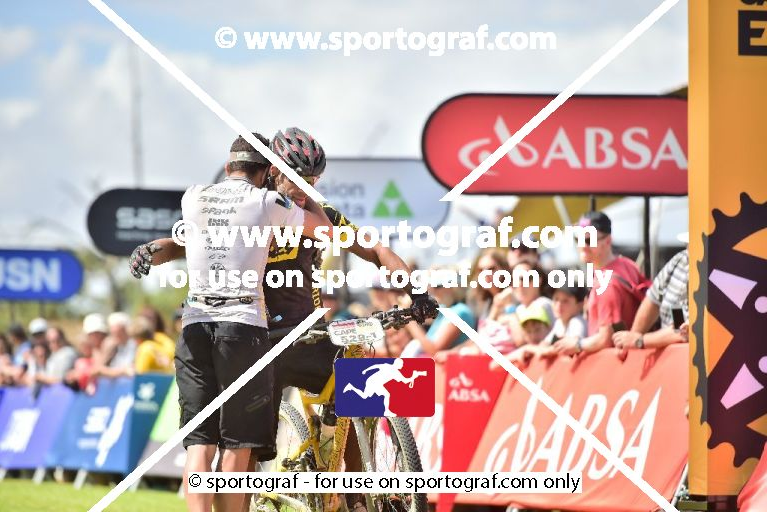
Errata
The logistics of this race are mind boggling. I went into the race with a deep desire to pay attention to the little things they did. From an organization stand point, I was completely blown away. Little things were attended to. The food was great. There was no shortage of bottled water, and water pump stations for race bottles. The porta-potties were plentiful, always clean, and had reasonable (and plentiful) toilet paper. The clinic was fully staffed. There was a notable security presence. The courses were all extremely well marked, and always had a person with a flag at questionable corners. The daily route stickers for our top tubes were life savers.
I would not do this race again. This is not mountain biking on single track. It just isn’t. It’s Epic. It’s really effing hard. Hardest thing I have ever done. All of that is true. Alex and I took advantage of the fact that he was already in Cape Town on a work rotation. Between the travel to get there, the logistics of remote planning, etc, this is a big thing to undertake if you are completely remote. Plus, the riding was just meh. Beyond that, Alex and I spent so much time staring at the wheels in front of us that we didn’t really ever feel like we were looking around enjoying the scenery. We would have finished at the bottom of the middle third if I had not been pulled. We’re not GC guys. We are accomplished endurance athletes. There are plenty of Type A guys who are faster. I’m happy for you. We were never really in danger of missing cut off times except the day I blew up. With all of that said, the daily pressure of making cut off time weighed heavy. So much time can be wasted on a stage if you get caught behind a walker on a single track, or a slow descender. These things are out of your control and you have to work around them. These things removed a lot of the fun from the race for us.
Coupled with this was the fact that so much of the race is riding on farm roads through vineyards. It gets old quick. There was also a lot of going downhill fast, into a corner, that was off camber, loose, and turned uphill to another vineyard. Sweet! The farm roads had a vary wide variety of quality. Many large rocks (bigger than baby heads) during climbs and descents. Very loose descents. Many off camber downhill corners. And sand.
Alex and I loved the format of buddies doing a stage race. 8 days is a big ask though. Be sure you understand that if you are going to do this race. However, we are already looking for the next pairs race we can do together. Breck Epic and Swiss Epic are current contenders.
The water stops were all extremely well manned, though Alex pointed out that there was no ice water at any of the stops. They might have arrived with ice water, but I suspect the heat had other opinions. There was plenty of water, food, alternative race nutrition if you needed it, and people to lube your chain and wash your glasses. Very cool.
Setup - I was on a Santa Cruz Tallboy C, with SRAM XX1 1×11, and SRAM Rise 60 wheels. I ran a Rock Shox SID RCT3. On the 1×11, I ran a 30T during the prologue (could have done with a 32T), and 28T for the stages. I likely could have done the whole race on a 30T, because the steeps where I had to walk would have put me off on a 30T. I ran the 28T because I had it and wanted to conserve legs where possible. My FTP is 260W, and I showed up to race at 158 lbs. Draw your own conclusions about what works for you. We both ran the Maxxis Ikon UST tires, with Ardent race tires in reserve. Perfect choice for this race.